
Network Effects Are Innovation in Disguise
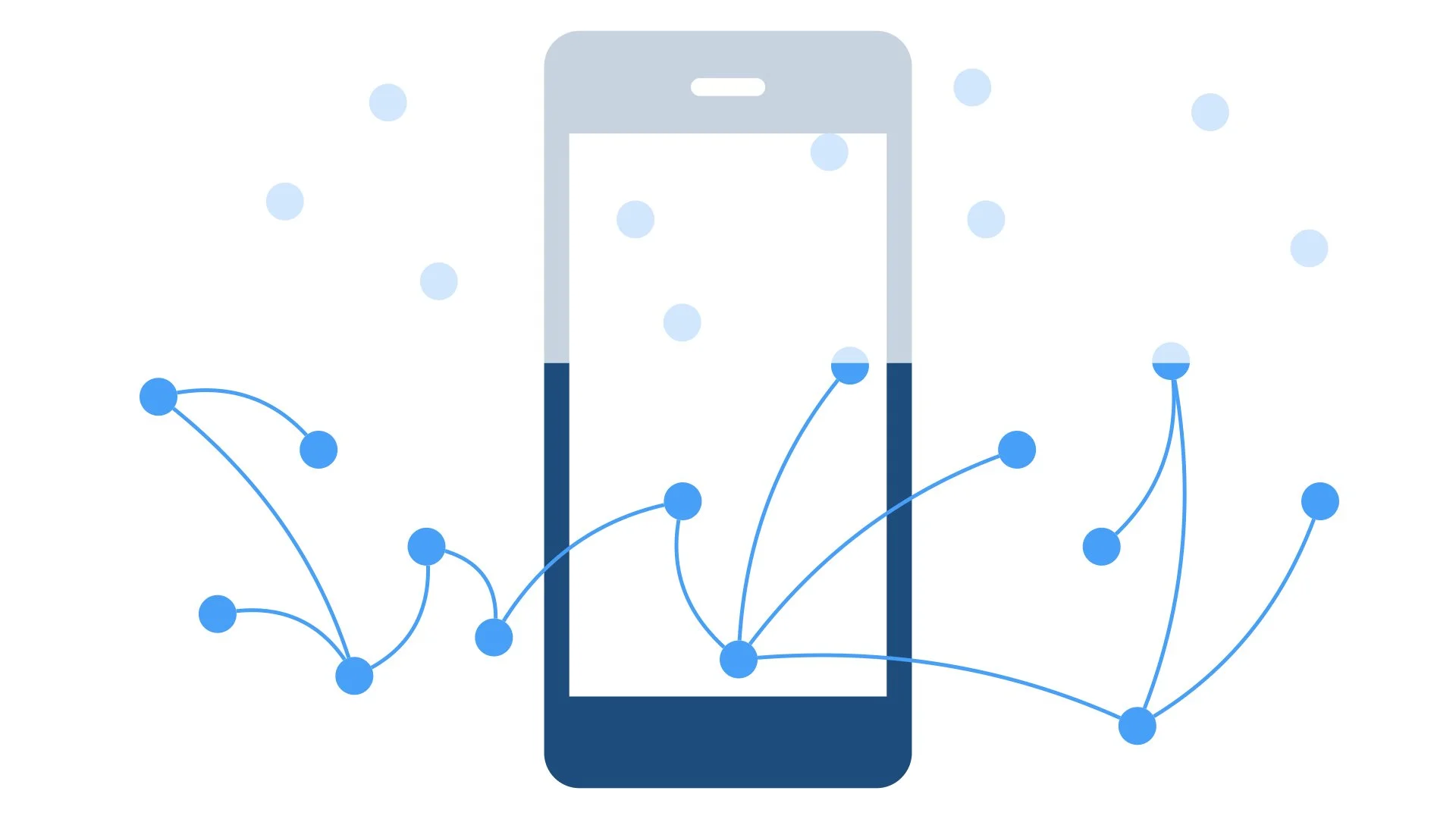
Network effects are one of the most studied phenomena in strategy. The literature spans more than four decades, from the earliest formal treatment of interdependent demand in communications (Rohlfs, 1974) through the foundational work on network externalities and compatibility (Katz & Shapiro, 1985; Farrell & Saloner, 1985), comprehensive surveys of network economics (Economides, 1996), the theory of increasing returns and path dependence (Arthur, 1989), and influential practitioner syntheses that shaped platform strategy for a generation (Shapiro & Varian, 1999).
Throughout this literature, rooted in the neoclassical economic tradition, network effects have been classified as a demand-side externality — value that arises from others' participation rather than from the product itself. The phenomenon is described at the level of the network: n-squared connections, installed base size, bargaining leverage. The product does not appear in this account as something that is changing. The user appears as a node whose presence changes the math, but the product itself remains the same.
This framing has been enormously productive. It has shaped platform strategy, venture capital investment theses, and even antitrust policy (the EU's Digital Markets Act and the US DOJ's cases against major technology platforms both cite network effects as a mechanism of market dominance). And it describes the phenomenon accurately — at a distance. But it does not explain what is happening to the product from the perspective of the person using it.
The Ofmos Theory of Business (Mitreanu, 2004; 2007; 2018) offers a different lens. Seen through the Ofmos Map — which positions every offering along two dimensions, perceived value and functional complexity — what the conventional understanding describes as a network externality looks like something else: a form of product innovation. The product is becoming more capable as adoption activates capabilities that were structurally present but latent. The user's experienced functional complexity is increasing — not because an engineer shipped an update, but because the network of users around the product grew.
This is not a refinement of the conventional understanding. It is a reframing — one that reveals what the phenomenon looks like from the user's side of the transaction rather than from the network's topology. At the product level, the Ofmos Theory identifies three forms of innovation: functionality-increasing (the product becomes more capable, with the aim of increasing perceived value), functionality-decreasing (the product becomes simpler, with a decrease in perceived value), and market innovation (perceived value is increased directly, without changing functionality). This post concerns the first form — the primary counterforce to commoditization. Within it, three distinct mechanisms operate: engineering, discovery, and adoption. Network effects, seen through this lens, are the last of the three — innovation through adoption.
Like all innovation, functionality-increasing innovation counteracts a structural force the conventional understanding does not address: the commoditization force, which acts on every offering in every market as customers accumulate knowledge over time.
1. The Product Is Missing from the Network Effects Literature
The standard explanation says that the value of a network is a function of its size. Metcalfe's law holds that value scales with the square of the number of users. Reed's law extends this to networks where users can form groups, where value grows exponentially. The common thread is that value scales with participation: more users, more value.
This is descriptively accurate. But it leaves the explanation at the level of the network. The user does not experience a network externality. The user notices that their colleague is now on the platform, that a community discussing their niche interest has formed, that the marketplace now has the seller they were looking for. What the user perceives is a product that can do more for them today than it could yesterday.
The conventional account treats this as an emergent property of the network's structure. The debate it has generated — including rigorous challenges to whether network effects constitute genuine market failures in the neoclassical sense (Liebowitz & Margolis, 1994) — is a debate about whether the phenomenon justifies regulatory intervention. For the product strategist, this question has no bearing. The strategist needs to know what is happening to the product, how long the current dynamic will last, and what to do when it ends.
2. What the Ofmos Theory Sees: The Product Becoming More Capable
The Ofmos Theory asks a different question. It does not recognize market failure; commoditization is a structural dynamic, not a deviation from efficiency. Instead of asking whether the phenomenon justifies intervention, the theory asks what is actually changing from the user's perspective. And the answer is specific: it is a change in the product's experienced functional complexity — what the product can actually do for this particular user in practice — and with it, an increase in perceived value. This is a strategist's question, not a regulator's. The dynamics that matter at the product level are commoditization and innovation, the structural forces that shape every market.
A messaging app may have the technical capability to connect any two users from the day it launches. But that capability is inert until the specific users who matter to a given customer are present. The app that can technically reach anyone but practically reaches no one the customer knows is functionally simple — it can do very little for the customer. The same app, once the customer's contacts have joined, is functionally complex — it supports rich communication, group coordination, content sharing, scheduling, and professional networking.
The user is experiencing a product that is genuinely becoming more capable over time. Not because the engineers shipped an update, but because the network of users around the product is growing. Each new user who joins activates capabilities that were latent. Features that existed on day one — group messaging, event coordination, marketplace transactions — become functional realities only when the participants arrive. The product's experienced functional complexity is increasing, and with it, its perceived value. The product is worth more because it can do more.
3. Functionality-Increasing Innovation Through Discovery
There is a second non-engineering mechanism that produces the same effect through a different path.
Apple is famous for not disclosing the full functionality of its products at the point of sale. The keynote announces the headline features. The marketing highlights three or four capabilities. The user buys the product and begins using it within that initial understanding. Then the discoveries begin. A gesture the user did not know existed. A shortcut that simplifies a daily task. An integration between two Apple devices that activates when both are nearby. A setting buried three levels deep that transforms how the product behaves. Over weeks and months, the user encounters capabilities that were present at purchase but invisible at the point of sale.
And the same dynamic can work in reverse: simplifying a product by removing features can increase the user's experienced functional complexity by making the remaining capabilities more accessible and discoverable.
The effect is the same as innovation through adoption: the product's experienced functional complexity increases. But the mechanism is different. Innovation through adoption activates latent capabilities when other users join. Innovation through discovery activates them when the individual user explores.
The Ofmos Theory names this mechanism product innovation through discovery (Mitreanu, 2026). It is innovation because the product becomes more capable and more valuable in the user's experience. It is through discovery because the change is driven by the user's own exploration, not by the vendor changing the offering or by other users joining the network.
Apple's design strategy appears to leverage this deliberately. By not disclosing the full functionality upfront, they create a product where the user's own learning process produces innovation over time. Each discovery increases the product's perceived value. The user experiences the product as getting better, when in fact the user is getting deeper into a product that was always this capable.
4. Functionality-Increasing Innovation Through Adoption
In engineering-driven innovation, a company writes new code, builds new features, ships updates. The product gains functional complexity through deliberate engineering — the company builds new capabilities, and the product becomes more capable. In the network effects case, the same thing is happening, but the mechanism is different: the product gains functional complexity through adoption, not engineering. The product becomes more capable because the network of users filled in, not because the company changed the offering. From the user's perspective, the two mechanisms produce the same experience. The product does more for them today than it did six months ago. Whether that is because the engineers built something new or because the network grew to the point where existing capabilities became active, the experience is the same: the product is more complex, more capable, and more valuable.
The Ofmos Theory names this mechanism product innovation through adoption (Mitreanu, 2026). It is innovation because the product becomes more capable and more valuable. It is through adoption because the change is driven by users joining the network, not by the vendor changing the offering.
The established literature recognized that for products with network effects, the value a user derives increases with the number of other users. But it classified this as a property of the network, not as a change in the experienced product. The Ofmos lens adds the missing step: this is a form of product innovation. The product is becoming more capable.
(The Ofmos lens enables a similar reframing in my blog post "A Need-Based Perspective on Increasing Returns" (Mitreanu, 2024). Increasing returns, as described in the theory of increasing returns and path dependence (Arthur, 1989), is a pattern where positive feedback within markets reinforces early advantages — the more a product is adopted, the more dominant it becomes, appearing to defy the expectation that products lose value over time. The blog post showed that this too is an illusion created by a coarse level of product framing and analysis. In fact, providers expand their products to address more of the customer's needs, evolving from point solutions toward platforms, and by aggregating these expanding business spaces, what appears as increasing returns is actually multiple products that are brought together into higher-value solutions, with now larger markets and streams of revenue.)
5. The Paradox of Learning: Commoditizing Known Features and Revealing New Ones
The Apple case reveals something theoretically precise. The One-Need Theory of Behavior (Mitreanu, 2007) establishes that as the customer accumulates knowledge about an offering, the perceived value decreases — the need-solution pair drifts lower in the customer's hierarchy as the need becomes clearer and easier to define. Learning drives commoditization. But in the Apple case, the customer's learning is simultaneously increasing their experienced functional complexity — they are discovering capabilities they did not know existed.
The same process — learning — is driving commoditization and counteracting it at the same time.
The user who has owned an iPhone for six months knows the interface intimately. The gestures are automatic. The app layout is familiar. The notifications are predictable. This is commoditization: the known features have lost their novelty, and the perceived value of those features has decreased. But the same user, during those six months, has also discovered AirDrop, Focus modes, the ability to extract text from photos, Shortcuts automation, and a dozen other capabilities they did not know existed at purchase. Each discovery increased the product's experienced functional complexity and, with it, its perceived value.
The net effect depends on the interplay between these two processes. Discovery does not stop commoditization, but it slows the erosion. The user who is still finding new capabilities experiences a product whose perceived value is declining more slowly than it otherwise would — and that slower decline is strategically consequential.
This is why Apple's strategy works as a counterforce to commoditization: it turns the user's own learning process (building understanding of the product) into a source of innovation. The continuous erosion of perceived value through accumulated customer knowledge — the force that acts on every offering in every market — is met by an innovation mechanism driven by the same customer learning. While products with full upfront functional complexity start commoditizing immediately, a product that withholds complexity — that is designed to be discovered — converts that same user learning into a source of innovation.
6. Functionality-Increasing Innovation Must Be Continuously Renewed
All three mechanisms of functionality-increasing innovation have a natural expiration. For innovation through engineering, the expiration arrives when the company can no longer build meaningful new capabilities at a pace that counteracts the commoditization force. For innovation through adoption, the expiration arrives when the network saturates. Everyone who is going to join has joined, and no new capabilities are being activated. The innovation through adoption stops. The commoditization force does not.
This is what happened to Facebook in its core markets around 2015–2018. User growth in North America and Europe plateaued. Everyone the user wanted to reach was already there. The adoption-driven innovation that had been slowing the erosion of perceived value was no longer operating. Facebook's response was to shift to innovation through engineering — new features (Stories, Marketplace, Reels), new formats (video, short-form content), and eventually new strategic directions (the metaverse pivot, then the AI pivot).
For innovation through discovery, the expiration arrives when the user has used the product long enough that no significant new capabilities remain hidden. The user knows what the product can do. The only learning that continues is the kind that erodes perceived value: increasing familiarity, fading novelty, growing awareness of limitations. Apple's annual cycle of new hardware and operating system releases has a notable effect: it restarts the discovery mechanism before the previous innovation effort ends. Each new version introduces new capabilities — some announced, some hidden — that give the user a fresh set of things to discover.
In every case, when a round of innovation reaches its limits, it must be renewed — through the same mechanism or a different one. Without that, the commoditization force, which was always present, is no longer being counteracted.
7. The Functionality-Increasing Product Innovation Mechanism Mix
At the product level, the strategist's response to commoditization is innovation. The Ofmos Theory identifies three forms. Functionality-increasing innovation increases the product's functional complexity, with the aim of increasing perceived value. Functionality-decreasing innovation simplifies the product, decreasing perceived value. Market innovation repositions the product at a higher perceived value without changing its functional complexity, effectively creating a new need context and, with it, a new functional market. It is a transformation of an existing market through perception-targeted efforts such as branding, regulatory change, narrative cultivation, or responses to major social or environmental disruptions.
The cases examined in this post concern functionality-increasing innovation — the form that most directly counteracts the commoditization force.
Within functionality-increasing innovation, three distinct mechanisms operate: engineering (the vendor builds new capabilities), discovery (the individual user finds capabilities that were present but not immediately apparent), and adoption (users joining the network activate capabilities that were already there). The combination of mechanisms sustaining a product at any given moment is its innovation mechanism mix. The mix is not static. It shifts as innovation efforts are launched through each mechanism over time. A product at launch may rely entirely on engineering. As users explore, innovation through discovery adds a second source. As adoption grows, innovation through adoption begins contributing. The product strategist's task is to understand the current mix, the runway remaining on each active effort, and what the mix will look like when any one of them runs out.
The reframing matters because it changes what the product strategist looks for. The conventional account asks: does this product have network effects? The question implies a binary choice — either the product benefits from network externalities or it does not. The Ofmos account asks a different question: what is this product's current functionality-increasing innovation mechanism mix, and how long can each innovation effort be sustained?
A note on the map's geometry: on a simplified map — including the game board used in OFMOS® Essential — functionality-increasing innovation is a horizontal move. On the full Ofmos Map, the move has elevation: increasing functionality is done with the aim of increasing perceived value, and the two dimensions move together. The simplified version isolates the mechanism; the full version captures the strategic intent.
8. AI Agents: Why Innovation Through Adoption Can No Longer Be an Afterthought
The reframing — understanding network effects as a form of functionality-increasing innovation rather than a network externality — has immediate consequences for AI.
Imagine you are a product strategist building a platform where AI agents — not just human users — participate. Booking agents on a travel marketplace. Trading agents on a financial exchange. Coding agents on a developer ecosystem. The conventional view tells you this is good news: more participants means stronger network effects, which means a deeper moat. Your go-to-market team's job is to get more agents onto the platform. But through the Ofmos lens, something different is happening. These agents are activating latent capabilities the same way human users do — this is innovation through adoption. And it is running at a speed no human network has matched. The dynamic that took Facebook a decade may compress into months.
This speed changes everything. Faster adoption means faster commoditization. The platform reaches its full capability quickly — and then the commoditization force, no longer counteracted by adoption, acts on a fully mature platform with nowhere left to grow. The platform becomes a commodity — functionally indistinguishable from what an open-source alternative could replicate, exposed to regulatory pressure as a perceived monopoly, vulnerable to specialized competitors who attract users with needs the commoditized platform addresses only generically. The strategist who mistakes this for a moat will find themselves adding features to push perceived value back up — creating clutter that degrades the product without restoring its position. This is not a background concern for go-to-market. This is a foreground concern for product strategy.
By the time adoption saturation becomes visible, the commoditization force has already reasserted itself, and the window for activating the next mechanism has narrowed. For AI products, reactive management of the innovation mechanism mix is not fast enough. The next mechanism — engineering, discovery, or both — must be in development from day one.
9. Product Strategy's Missing Capability: The Deliberate Management of the Functionality-Increasing Innovation Mechanisms
Innovation efforts pushed through each of the three functionality-increasing innovation mechanisms — engineering, discovery, and adoption — have a limited lifetime. And each effort is inherently sequential and cyclical: bound by development timelines, the limits of what users have left to discover, or adoption curves. If left unmanaged, gaps appear between cycles, periods when no innovation effort is active. If those gaps align across the three mechanisms, the company’s functionality-increasing innovation efforts disappear, making the effects of the commoditization force more apparent. (This can be manifested in many ways, including customer pressure for discounts and internal push for increased profitability.)
The product strategist's challenge, when it comes to functionality-increasing innovation, is building sustained innovation through deliberate mechanism management — running all three mechanisms in continuous cycles, staggering their timing so that at any point, at least one is actively counteracting commoditization, and minimizing the risk of simultaneous gaps across all three.
Apple illustrates what appears to be deliberate mechanism management: engineering innovation (new hardware, new OS features) provides the raw material for discovery-driven innovation (progressive disclosure, hidden capabilities), which sustains perceived value between engineering cycles. The engineering mechanism feeds the discovery mechanism. The two operate in relay. Facebook illustrates a different pattern: adoption-driven innovation ran for a decade, and when adoption saturated in core markets, the company shifted to engineering-driven innovation — Stories, Marketplace, Reels, and eventually new strategic directions including AI.
At any given moment, the product strategist needs to know three things. What is the current innovation mechanism mix — which mechanisms are active and what is each contributing? How much runway does each current effort have before it reaches its limits? And what is being prepared — whether a new effort through the same mechanism or activation of a different one — to take over when the current effort reaches its limits?
This is the new capability of deliberate management of the functionality-increasing innovation mechanism mix over time, and one essential part of the product strategist's broader toolkit, alongside functionality-decreasing and market innovation.
The conventional network effects literature cannot lead to this capability in product strategy, because it treats network effects as a structural property of the network — something the product either has or does not have. A binary assessment, made once. The Ofmos account treats network effects as one of three functionality-increasing product innovation mechanisms, each producing efforts with their own lifecycle — each requiring continuous attention, renewal, and coordination with the others. Once you see functionality-increasing product innovation as a mix of mechanisms rather than a single phenomenon, the need for their deliberate, ongoing management becomes clear.
References
Arthur, W.B. (1989). "Competing Technologies, Increasing Returns, and Lock-In by Historical Events." The Economic Journal, 99(394), 116–131.
Economides, N. (1996). "The Economics of Networks." International Journal of Industrial Organization, 14(6), 673–699.
Farrell, J. & Saloner, G. (1985). "Standardization, Compatibility, and Innovation." RAND Journal of Economics, 16(1), 70–83.
Katz, M.L. & Shapiro, C. (1985). "Network Externalities, Competition, and Compatibility." American Economic Review, 75(3), 424–440.
Liebowitz, S.J. & Margolis, S.E. (1994). "Network Externality: An Uncommon Tragedy." Journal of Economic Perspectives, 8(2), 133–150.
Mitreanu, C. (2004). "Strategy, Redefined." RedefiningStrategy.
Mitreanu, C. (2007). "A Business-Relevant View of Human Nature." RedefiningStrategy.
Mitreanu, C. (2018). "A Natural Theory of Needs and Value." RedefiningStrategy.
Mitreanu, C. (2024). "A Need-Based Perspective on Increasing Returns." Ofmos Blog, OfmosUniverse.com.
Mitreanu, C. (2026). "The One-Need Theory of Behavior and the Ofmos Theory of Business." The Foundational Theories, Ofmos.com.
Rohlfs, J. (1974). "A Theory of Interdependent Demand for a Communications Service." Bell Journal of Economics and Management Science, 5(1), 16–37.
Shapiro, C. & Varian, H.R. (1999). Information Rules: A Strategic Guide to the Network Economy. Harvard Business School Press.
Image: Cristian Mitreanu — Network Effects as Product Innovation, May 2026